Why Teacher-Made Videos Matter
Students come to mathematics class with a wide range of ability levels, attitudes, confidence levels, and interests. Some students are ready to move quickly through a problem, while others may need to hear an explanation more than once, pause at key moments, or return to a topic after class. This raises a practical question for teachers: how can we reach more students without reducing the classroom to a one-size-fits-all model?
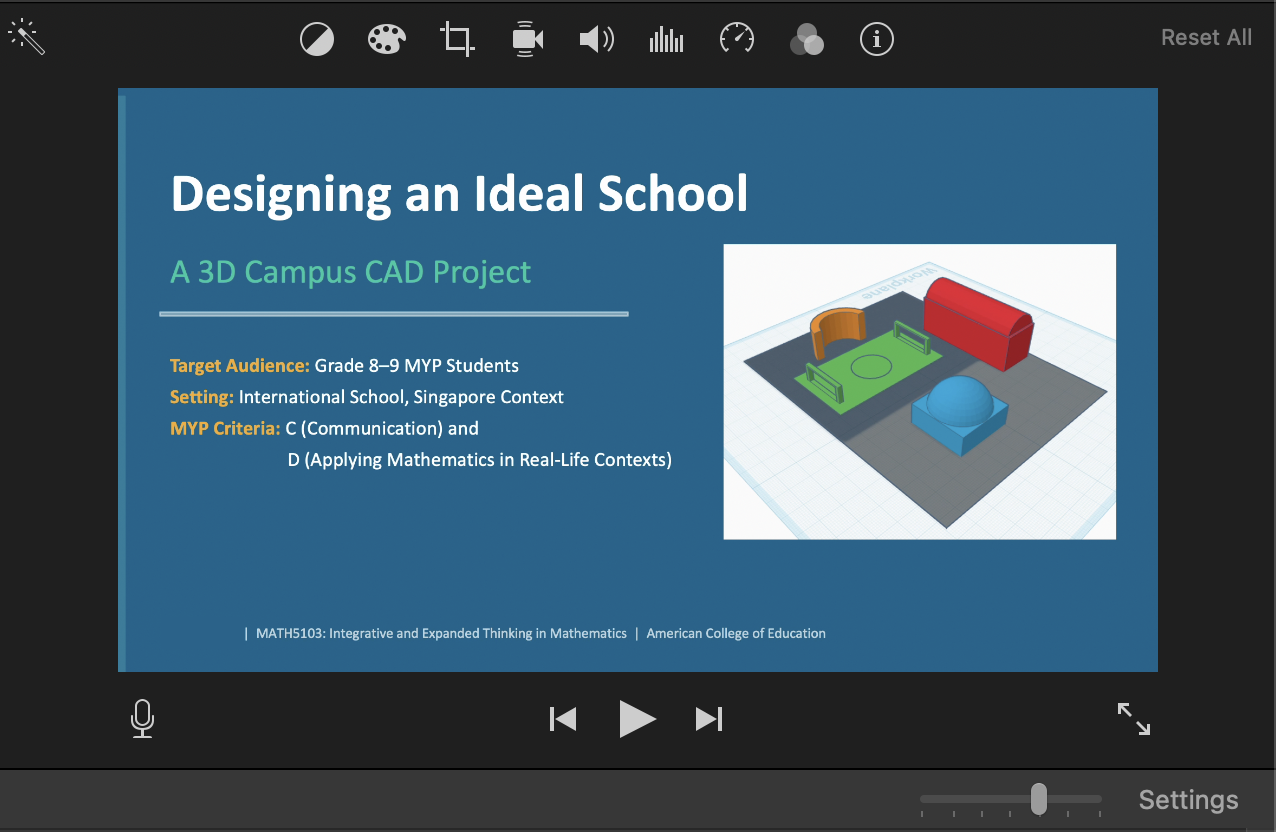
Recently, I have been experimenting with online videos, particularly YouTube videos, as part of an International Baccalaureate Mathematics: Applications and Interpretations SL course. What began as a simple way to review homework questions or key test problems gradually developed into a broader attempt to create online revision resources. In this sense, the project grew out of a familiar classroom need: students often benefit from worked examples, but the printed worked solution does not always capture the thinking process behind the work.
Making Mathematical Thinking Visible
A written solution may show the final algebraic steps, but a video solution can make the sequence of reasoning more visible. The teacher can pause at a common misconception, highlight a keyword in real time, sketch a diagram, compare two possible methods, or explain why a particular formula is appropriate. This matters in mathematics because students are not only learning procedures but are learning how to make decisions within a problem.
Research on multimedia learning supports the idea that well-designed instruction can benefit from combining words and visuals, especially when the design reduces unnecessary cognitive load and helps students attend to the most important information (Mayer, 2021). In a mathematics video, this might mean writing each step as it is explained, circling key information from the question, or using a diagram to connect symbolic work to a visual representation. The value is not simply that the lesson is "online," but that the medium allows the teacher to sequence attention carefully.
Supporting Self-Paced Revision
One of the major advantages of video solutions is that it gives students greater control over pace. In a live classroom, the lesson largely moves forward collectively. This is often necessary, but it also means that some students are waiting while others are still processing. With online videos, students can pause, rewind, skip familiar sections, or replay a specific step. Kay's (2012) review of research on video podcasts in education found that students often responded positively to video resources because they supported flexible learning, review, and control over the pace of study. For mathematics revision, this is particularly important. A student who is confused about a single step in a trigonometry problem does not necessarily need an entire lesson repeated, although may need more focused review on a particular aspect of the problem-solving procedure.
Video resources may also support students who are reluctant to ask for help publicly. Some learners do not want to interrupt class or reveal confusion. A categorized set of revision videos can give these students a path back into the material. They can search for a topic, choose a question at the right level, and review privately. This connects loosely to Vygotsky's Zone of Proximal Development, where learning is most productive when students are working within a zone where the task is challenging but still reachable with support. A well-organized video library can help students find that level of support more independently.
Extending, Not Replacing, Classroom Teaching
Still, teacher-made videos should not be treated as a replacement for classroom dialogue. They are not a substitute for questioning, discussion, immediate feedback, or the relational aspects of teaching. A video has an imagined interlocutor where the teacher speaks to a generalized audience, anticipating where confusion may arise. This can be powerful, but it is still different from responding to a particular student in the moment. The goal, then, is not to replace classroom teaching, but to extend it. Videos can preserve some of the teacher's explanation beyond the lesson and make it available when students are actually studying.
Designing Videos That Students Will Actually Use
The design of the videos matters. Guo, Kim, and Rubin (2014) analyzed a number of video-watching sessions from edX courses and found that shorter videos tended to be more engaging, and that informal, tablet-style explanations were often more engaging than simple recordings of long lectures. For a classroom teacher, this is encouraging. A simple tablet recording, with the teacher solving a problem naturally and clearly, may be more useful than a highly formal lecture capture for some purposes. The emphasis should be on clarity, pacing, and relevance.
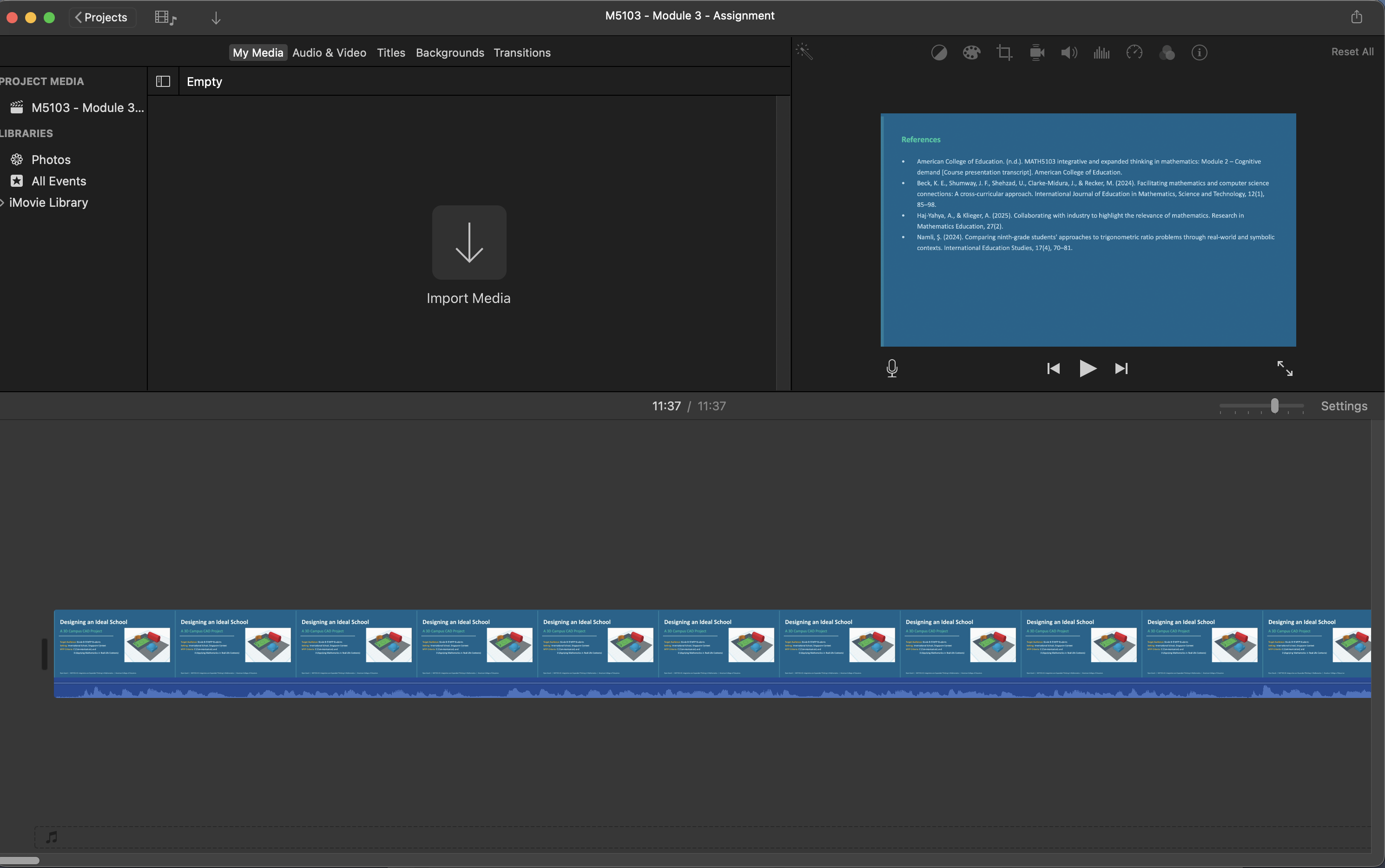
In my own process, the basic tools have been relatively simple: an iPad for live writing, a microphone, screen-recording software, and editing tools such as iMovie or CapCut. These tools allow a teacher to remove long pauses, reduce background noise, add transitions, or combine shorter clips into a more coherent revision sequence. The technical barrier is not as high as it may initially seem and a teacher does not need a full studio setup to begin creating useful materials.
Building a Useful Resource Catalogue
The more important challenge is organization. Teachers can begin by working through past examination questions, common homework problems, or teacher-generated questions. Over time, these can be organized into a catalogue by topic, difficulty level, or assessment objective. For an IB, AP, or IGCSE Mathematics course, this might include categories such as functions, statistics, probability, calculus, financial mathematics, or geometry and trigonometry, or may even draw on syllabus classifications for reference. Ranking videos by challenge level can also help students choose appropriate practice rather than simply watching passively.
Contributing Beyond the Classroom
This is where video creation becomes more than a convenience. It becomes a contribution to a wider professional and educational community. Within a classroom, students are, in some sense, a captive audience. They usually receive materials from the teacher most immediately available. Online, however, students have access to a much wider range of explanations, styles, and examples. Platforms such as YouTube allow teachers to contribute to a broader body of knowledge, where students from different schools and contexts may benefit from a particular explanation. Videos themselves should be accurate, clearly labelled, and aligned with the intended curriculum. Fyfield et al. (2022), in a review of instructional video design, found support for design principles such as coherence, segmenting, and learner control. In practical terms, this suggests that videos should be focused, organized into manageable sections, and designed so students can navigate them easily.
Starting Small and Growing Over Time
For teachers beginning this process, a reasonable first step is not to build an entire course. It is to identify a recurring point of difficulty and create a single video or small set of videos around it. For example, a teacher might record a solution to a probability question involving a tree diagram, a calculus optimization problem, or a statistics question involving the normal distribution. Once a few videos exist, patterns may begin to emerge, such as which explanations are most useful, which questions students return to, and which topics require additional support.
Creating online video resources is therefore both a practical teaching strategy and a form of professional contribution. It allows teachers to respond to student needs, experiment with new modes of explanation, and share expertise beyond the immediate classroom. It also involves a degree of risk. The teacher must learn unfamiliar tools, publish work, and accept the learning process itself. Yet this risk is also part of professional growth. The process pushes one to think carefully about explanation, sequencing, accessibility, and audience.
Conclusion
Ultimately, teacher-made videos are valuable not because they are technologically impressive, but because they can make mathematical thinking more visible. They allow students to revisit a problem at their own pace, hear the reasoning behind each step, and access support outside the fixed boundaries of class time. For mathematics educators, this is a meaningful way to extend instruction, support revision, and contribute to a growing culture of shared educational resources.
References
Fyfield, M., Henderson, M., Heinrich, E., & Redmond, P. (2022). Improving instructional video design: A systematic review. Australasian Journal of Educational Technology, 38(3), 155–183. https://doi.org/10.14742/ajet.7296
Guo, P. J., Kim, J., & Rubin, R. (2014). How video production affects student engagement: An empirical study of MOOC videos. Proceedings of the First ACM Conference on Learning @ Scale Conference, 41–50. https://doi.org/10.1145/2556325.2566239
Kay, R. H. (2012). Exploring the use of video podcasts in education: A comprehensive review of the literature. Computers in Human Behavior, 28(3), 820–831. https://doi.org/10.1016/j.chb.2012.01.011
Mayer, R. E. (2021). Multimedia learning with instructional video. In R. E. Mayer & L. Fiorella (Eds.), The Cambridge handbook of multimedia learning (3rd ed.). Cambridge University Press.