Mathematics can sometimes feel, from a student's perspective, overly abstract, decontextualized, and disconnected from everyday experience. There are perennial questions many mathematics teachers may have heard many times before: Why are we doing this? When will I use this? What is the point? These questions matter because perseverance in mathematics is closely connected to whether students can see meaning in the work. When mathematics is experienced only as a set of procedures to be recognized and applied, students may learn to complete exercises without seeing mathematics as a flexible tool for thinking, designing, modeling, and decision-making.
This is where integrative mathematics tasks can be especially powerful. By integrative tasks, I mean rich, real-world, problem-based tasks that bring together multiple mathematical ideas and ask students to use mathematics for an authentic purpose. These tasks may involve inquiry, collaboration, modeling, technology, communication, and decision-making. At their best, they do not simply add a "real-world context" after the mathematics has already been taught. Instead, the mathematics becomes necessary because students require the mathematics to make progress on the problem itself.
Low Floor, High Ceiling Tasks
One helpful way to think about rich mathematical tasks is through the lens of a "low floor, high ceiling" design. This phrase is often associated with Jo Boaler and the work of youcubed, where open mathematical tasks are designed so that students of varying ability levels can enter the problem while still allowing room for depth, complexity, and extension. Boaler (2016) argues that mathematical learning is strengthened when students encounter tasks that invite multiple approaches, representations, and ways of thinking. Similarly, low-floor, high-ceiling tasks are designed to be accessible to students with different backgrounds while still offering opportunities for sophisticated mathematical thinking.
The "low floor" is important because it allows students with varying levels of confidence or prior achievement to begin. They do not need to know the most advanced method immediately in order to contribute. The "high ceiling" is equally important because the task does not end once a basic answer is found. Students can improve their methods, refine their models, justify their decisions, compare approaches, and extend the problem in more sophisticated ways.
This structure is especially valuable in group work. In a strong collaborative task, different students can contribute in different ways. One student might organize data, another might create a visual model, another might notice a mathematical pattern, and another might explain the reasoning clearly. This helps shift mathematics away from the idea that there is only one path to one correct answer. Instead, students experience mathematics as a space for discussion, strategy, representation, and justification.
Why Real-World Context Matters
Real-world mathematical tasks can help students see the usefulness and purpose of mathematics. A traditional exercise may ask students to calculate area, volume, or calculate a mean from a given dataset. These skills are important, but the task is often narrow, as students may identify the type of problem, select the relevant procedure, and carry it out. In contrast, a real-world task asks students to decide which mathematics is useful, how accurate their answer needs to be, whether the result makes sense, and how their solution should be communicated or justified.
The messiness of real-world problems is part of the value. Real-world problems rarely arrive already sorted, but instead often involve incomplete information, competing priorities, and multiple possible approaches. The National Council of Teachers of Mathematics (2014) emphasizes the importance of mathematical tasks that promote reasoning, problem solving, productive struggle, meaningful discourse, and the use of multiple representations. These are precisely the habits of mind that integrative tasks can develop when these tasks are designed carefully.
Problem-based learning can also support this kind of mathematical development. Research on problem-based learning in mathematics suggests that it can positively affect students' mathematical creativity, with one recent meta-analysis finding a medium overall effect across thirteen studies when tasks are well-structured and appropriately scaffolded (Bron & Prudente, 2024). The key point is not simply to give students a large project and hope that learning happens. The task must be designed so that important mathematical ideas and broader construction of meaning is genuinely required.
The Role of Scaffolding and Problem-Solving Habits
Rich tasks require careful planning. Students may need support in understanding the problem, identifying relevant information, choosing a method, testing a solution, and reflecting on whether their answer is reasonable or well justified. This is where scaffolding becomes essential. Scaffolding does not mean removing the challenge, but rather asking purposeful questions, drawing attention to important features of the task, and helping students connect the problem to mathematical foundations they already have.
Polya's classic problem-solving framework is useful here. This framework or heuristic lays out an iterative design process or problem-solving approach, where students understand the problem, devise a plan, carry out the plan, and look back (Polya, 1945). This structure helps students develop metacognitive habits. They are not only solving a particular problem but are learning how to approach unfamiliar problems more generally in a range of contexts. In this sense, teaching mathematics is not just about teaching discrete procedures, but about teaching ways of thinking and habits of mind, i.e. how to notice structure, test assumptions, compare strategies, communicate reasoning, and revise a solution.
Example: Designing an Ideal School
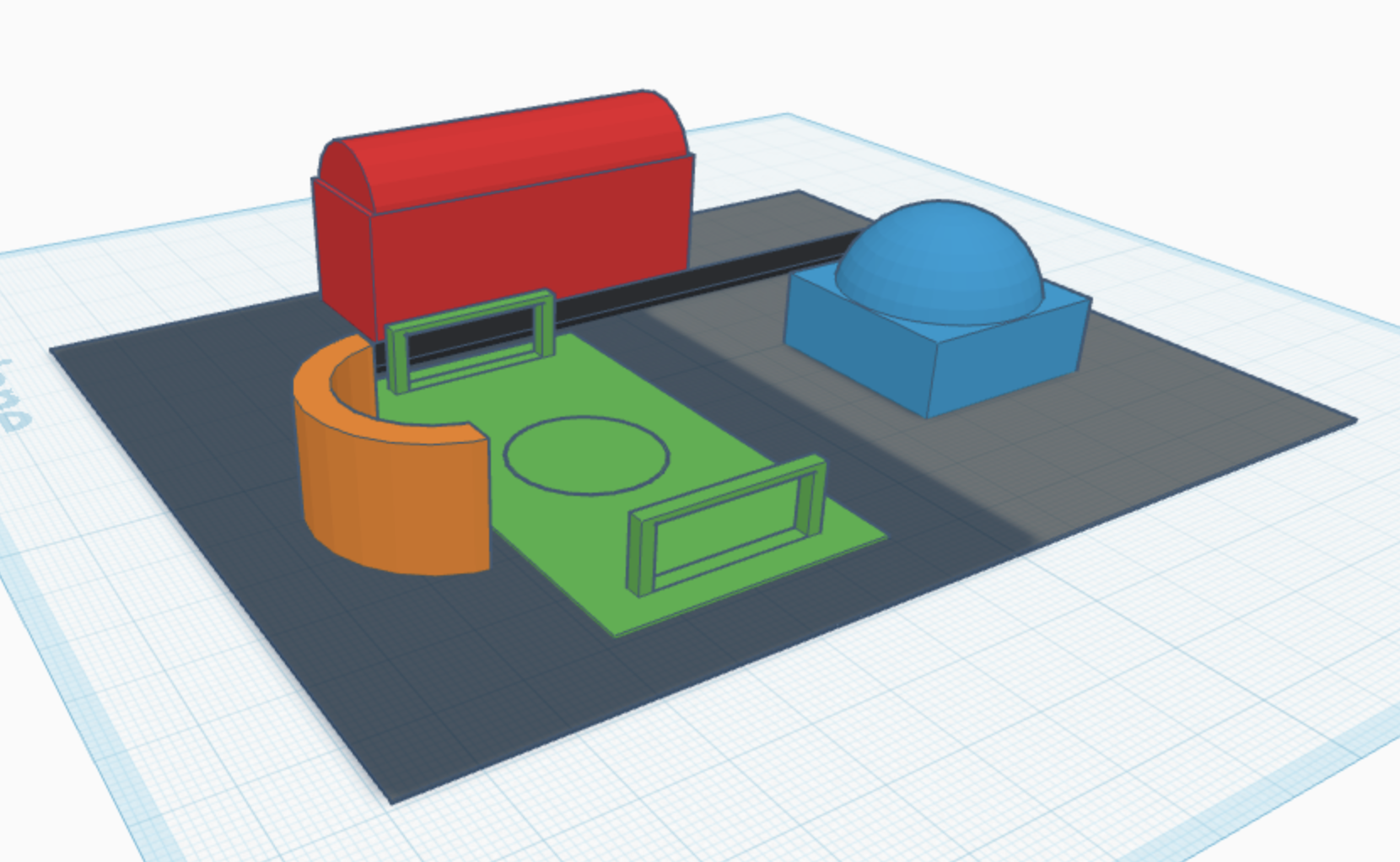
One example of an integrative task is a 3-D printing project in which students design their own ideal school. In this task, students take on the role of planning advisors. They begin by surveying a population about what users would want in an ideal school. They then analyze and present the survey results before designing a school model using computer-assisted design, or CAD, software. As an added source of engagement, students can eventually see their school realized as a physical model through 3-D printing.
This task naturally integrates several areas of mathematics. Students may use statistics to collect, organize, and interpret survey data. They may calculate mean, median, mode, range, or create visual displays such as bar charts, pie charts, or box plots. More advanced students might discuss outliers, variance, or standard deviation. In the design phase, students work with scale, area, surface area, volume, and composite shapes. A simpler design might involve cuboids and prisms, while a more ambitious design might include curved surfaces, open spaces, multi-level structures, or more complex combinations of shapes.
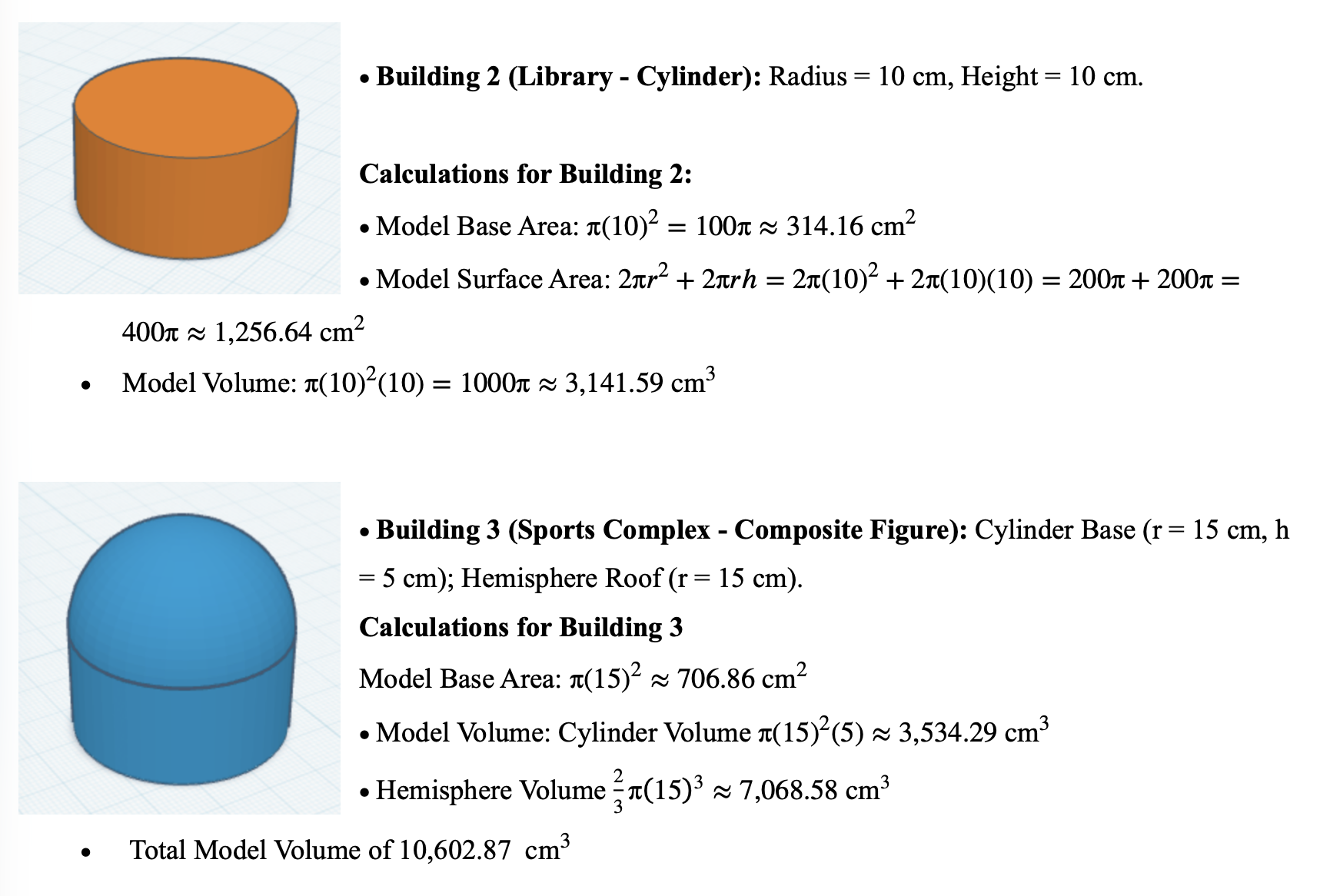
This is what makes the task low floor and high ceiling. A student can begin with basic measurements and simple shapes, but the same task can also support much more advanced reasoning. Students can ask whether their design reflects the survey results, whether the model is realistic, whether the available space is used efficiently, and whether the final proposal is persuasive. Mathematics becomes a tool for solving a problem rather than a set of disconnected calculations.
The task also supports communication, collaboration, and organization. Students need to justify their design choices, present their data clearly, and explain how the mathematics supports their decisions. If the final product is framed as a design competition or presentation to an advisory panel, students have an authentic reason to communicate their reasoning carefully and justify their decisions. Their mathematical work has an audience and a purpose.
Designing for Success
For integrative tasks to work well, teachers need to be intentional. Students benefit from clear success criteria, discussion norms, and structured roles. If group work is included, essential agreements around participation and responsibility are important. In this sense, a strong rubric might assess mathematical accuracy, use of representations, quality of reasoning, connection to the real-world context, creativity, and clarity of communication.
Teachers also need to choose tasks carefully. Resources such as youcubed, NRICH Mathematics, and NCTM can provide inspiration, but tasks usually need to be adapted for the specific curriculum, age group, and the particular classroom context. A task should be open enough to allow multiple approaches, but focused enough that students are working toward a shared, meaningful mathematical goal.
Ultimately, integrative mathematics tasks help students experience mathematics as something active, useful, and creative. They make room for student voice, multiple strategies, productive struggle, and authentic application. When designed well, they answer the question "When will I use this?" not with a more vague promise or assertion, but with an immediate experience. Within integrative tasks, students use mathematics as the task requires it, and because the mathematics helps them create something more thoughtful, purposeful, and real.
References
Boaler, J. (2016). Mathematical mindsets: Unleashing students' potential through creative math, inspiring messages and innovative teaching. Jossey-Bass.
Bron, J. F., & Prudente, M. S. (2024). Examining the effect of problem-based learning approach on learners' mathematical creativity: A meta-analysis. International Journal of Research in Education and Science, 10(3), 653–668.
National Council of Teachers of Mathematics. (2014). Principles to actions: Ensuring mathematical success for all. NCTM.
Polya, G. (1945). How to solve it: A new aspect of mathematical method. Princeton University Press.